Japan Sumo Tournament Schedule, Dates, and Tickets
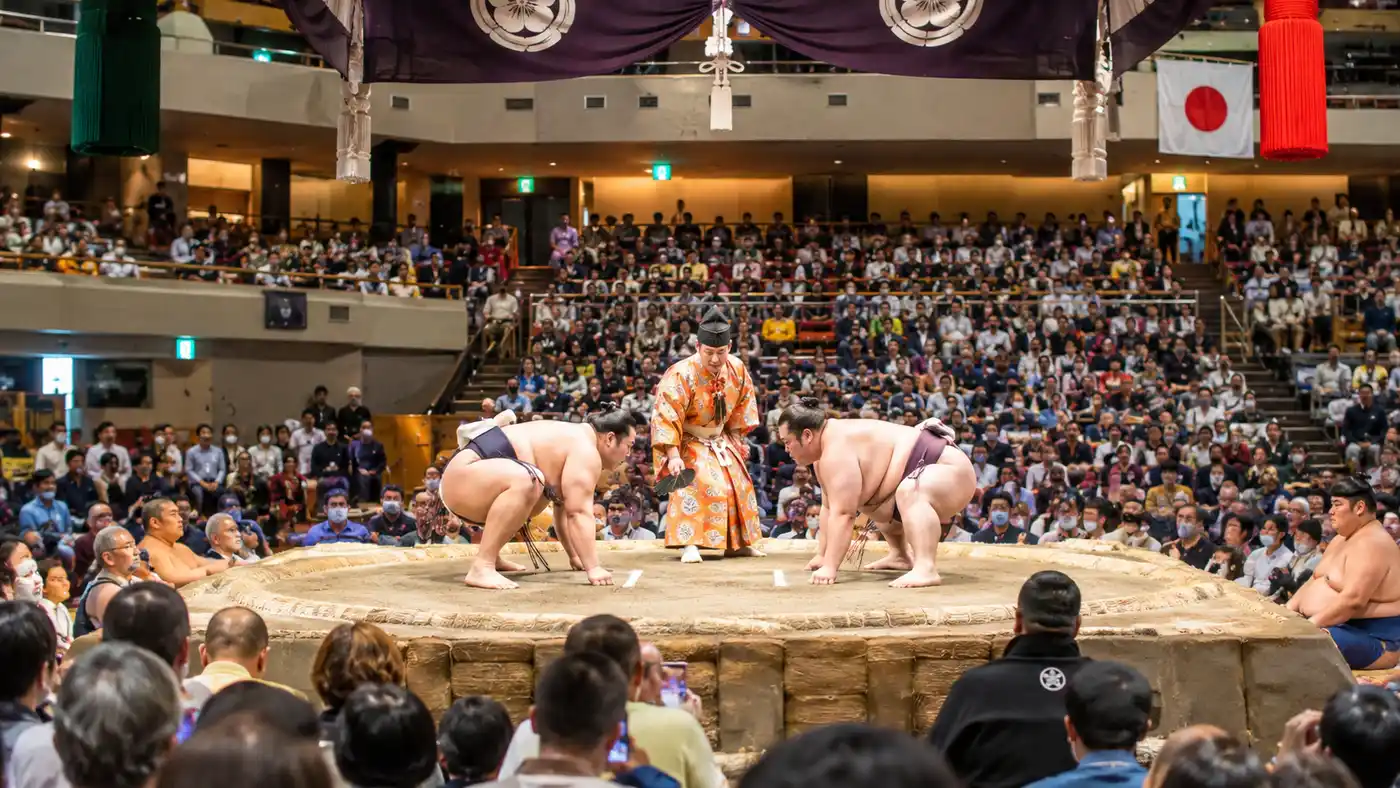
The first thing that hits you when you enter the arena isn't the roaring crowd or the sight of two three-hundred-pound men squaring off on clay. It is the smell. Japanese hair oil, called bintsuke, carries a sweet, heavy scent of camellia wax and vanilla that lingers across the entire stadium. Sitting four rows up from the ring during my first sumo wrestling tournament, I could feel the thud of colliding bodies vibrating right through the wooden floorboards. There is nothing else like it on earth, but catching one live requires careful planning around a strict national calendar.
Grand Sumo operates on its own ancient rhythm. If you land in Tokyo expecting to grab a ticket on a random Tuesday, you will probably walk away empty-handed. Professional tournaments happen only six times each year, scattered across four cities, running for exactly 15 days at a stretch. Navigating the schedule, understanding how the ticketing lottery works, and knowing which seat won't destroy your knees can feel overwhelming. This guide breaks down the full annual calendar, exact tournament routines, and honest strategies for securing seats before they vanish.
Book your sumo wrestling kyoto experience:
Understanding the Japanese Sumo Tournament Calendar
Professional sumo, known as Grand Sumo or Ozumo, follows a rigid, alternating pattern. Six official tournaments take place every year, always held during odd-numbered months. January, May, and September take place inside Tokyo's historic Ryogoku Kokugikan. March moves west to Osaka. July lands in the sweltering heat of Nagoya, and November wraps up the sporting year down south in Fukuoka. Even-numbered months are reserved for recovery, ceremonial tours across rural towns, and intense morning stable training.
Every single tournament begins on a Sunday and wraps up on a Sunday two weeks later. The athletes fight once a day, every day, without breaks. Because each contest is an elimination toward an overall 15-day record, the tension builds steadily across the fortnight. Mid-week days during the first week tend to be somewhat calmer, while the middle weekend and the final three days are electric, chaotic, and impossible to book late. If you are wondering when is sumo season in japan, the simple answer is every odd month, but your itinerary will dictate which city you must target.
Here is how the six annual grand tournaments break down across the country:
| Tournament | Month | Host City | Venue | Typical Dates |
|---|---|---|---|---|
| Hatsu Basho | January | Tokyo | Ryogoku Kokugikan | Second Sunday to fourth Sunday |
| Haru Basho | March | Osaka | EDION Arena Osaka | Second Sunday to fourth Sunday |
| Natsu Basho | May | Tokyo | Ryogoku Kokugikan | Second Sunday to fourth Sunday |
| Nagoya Basho | July | Nagoya | Aichi Prefectural Gymnasium | First or second Sunday start |
| Aki Basho | September | Tokyo | Ryogoku Kokugikan | Second Sunday to fourth Sunday |
| Kyushu Basho | November | Fukuoka | Fukuoka Kokusai Center | Second Sunday to fourth Sunday |
Tokyo gets half of the annual calendar, which makes it the easiest city for most foreign travelers to target. If your trip happens in January, May, or September, your chances of catching a basho are relatively high. Outside of Tokyo, the atmosphere shifts. Osaka in March has an rowdier, noisier crowd, while Nagoya in July is notoriously humid, pushing both wrestlers and spectators to their physical limits.
Sumo Wrestling Tournament Schedule and Venues
Every arena has its own personality, but Tokyo's Ryogoku Kokugikan remains the spiritual mothership of the sport. The building holds over 11,000 spectators under a suspended ceiling modeled after a traditional Shinto shrine. The venue is clean, easy to navigate, and houses its own underground yakitori kitchen that roasts thousands of skewered chicken thighs daily. Chicken is traditional sumo food because birds stand on two legs, just like a wrestler wants to do in the ring.
EDION Arena in Osaka feels much more compact. Sightlines are tighter, and you are closer to the ring even in upper seats, though the facilities show their age. Fukuoka's Kokusai Center sits near the port, quiet and slightly breezy outside, but the hall itself gets surprisingly loud when local favorites step onto the dirt. Nagoya's tournament used to be held in an older venue without central air conditioning, earning it the nickname "the sauna basho." The new Aichi arena has modernized things, but July temperatures in central Japan remain brutal.
Pro tip: Rent an English audio guide receiver on the second floor of Ryogoku Kokugikan for around 1,000 yen. The live commentary explains small fouls, historical grudges, and wrestler backstories that you will otherwise completely miss from your seat.
Knowing the seating tiers before you buy is essential. Sumo seating is split into three drastically different formats:
- Ringside cushion seats (Tamari-seki): The first few rows directly beside the dirt ring. You sit on a single flat pillow on the floor, you cannot bring food or drinks, and you run a genuine risk of having a 350-pound man fall directly onto your lap. These seats rarely hit public sales and usually belong to long-time patrons.
- Box seats (Masu-seki): Square, railed-off wooden enclosures occupying the lower bowl. Each box fits up to four people sitting on cushions. You take off your shoes before stepping in, spread out your snacks, and pour cold beer while watching the bouts. They are social, comfortable for two people, but very cramped for four full-grown adults.
- Arena chair seats (Is-seki): Western-style stadium chairs occupying the upper balconies. While you are further from the action, the rake of the balcony gives fantastic unobstructed views of the whole ring. They cost significantly less and are vastly easier on stiff joints.
How to Buy Sumo Tickets in Japan Without Losing Your Mind
Getting your hands on tickets requires fast reflexes and realistic expectations. General public sales typically open roughly five to six weeks before the first day of each tournament. If you try to log onto the official ticketing site the day sales open without an account already made, you will end up staring at a sold-out loading screen within ten minutes.
The official English portal run by Ticket Oosumo is the safest, most straightforward path for overseas visitors. They accept foreign credit cards and allow you to select specific days, though seating choice is usually automated based on the best available tier. Lotteries open first, usually seven weeks out. You enter your card details and pick your preferred dates; if selected, your card gets charged automatically. If you miss the lottery, you have to fight for general sale leftovers on a Saturday morning.
Note: Box seats are sold as a whole unit, not individual spots. If you buy a standard 4-person Masu-seki for two people, you will pay the price of four tickets, though you get the entire square box to yourself to stretch out comfortably.
If the official lottery fails, third-party ticket concierges and tour packages exist, though they tack on substantial service fees. Sometimes paying an extra $40 per ticket through an agency is the only way to lock down a seat during a tight vacation window. You can also monitor verified resale apps like Pia or Lawson Ticket, but they usually require Japanese phone verification. In Tokyo, a tiny handful of unreserved balcony tickets (Jiyu-seki) were traditionally sold on the morning of each match day at the box office for roughly 2,500 yen, but that policy changes frequently depending on tournament sell-out rates and health guidelines.
Book your sumo wrestling kyoto experience:
Planning Your Day at a Sumo Competition in Japan
A full tournament day runs for nearly ten hours, starting around 8:30 in the morning and wrapping up shortly after 6:00 in the evening. Most tourists show up at 10:00 AM thinking they need to watch every single second, only to burn out by early afternoon. The lowest-ranked divisions (Jonokuchi and Jonidan) fight early in an almost completely empty arena. There are no announcers, no referees with elaborate brocade robes, and no crowd noise except the hollow echo of skin slapping skin.
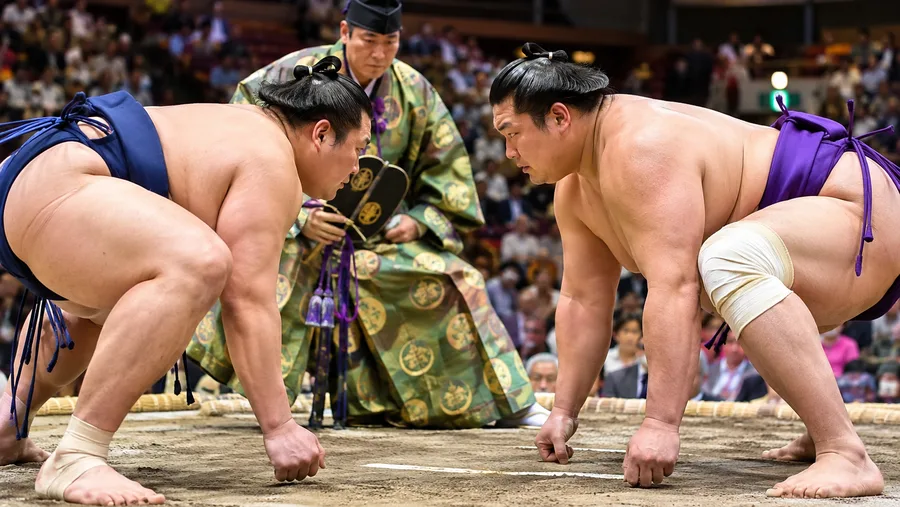
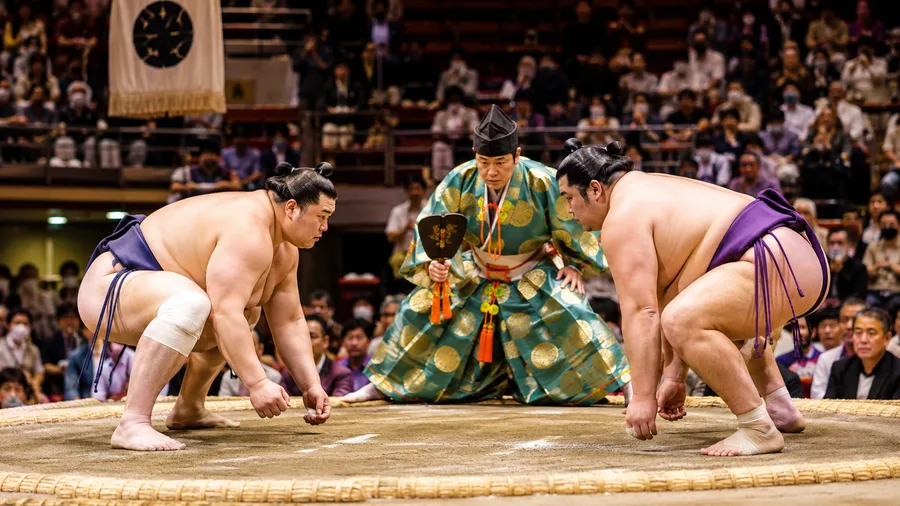
Arriving around 2:00 or 2:30 PM is usually the sweet spot. That is when the second-tier division (Juryo) enters the stadium, greeted by a rising buzz in the hallways. Wrestlers start looking larger, the referees wear silk robes, and the ceremonial ring-entering rituals (dohyo-iri) begin. By 3:45 PM, the top-tier division (Makuuchi) takes over. The arena fills to capacity, banners carrying corporate sponsor logos circle the ring before major bouts, and the energy peaks as the Yokozuna (grand champion) performs his stamping ceremony. To understand the subtle referee calls and scoring methods during these high-stakes clashes, take a look at our breakdown of sumo rules and scoring before you head inside.
Match days generally follow this steady daily progression:
- 8:30 AM: Arena doors open; entry-level apprentices fight in relative silence.
- 2:30 PM: Juryo division wrestlers arrive; crowd begins filing into box seats.
- 3:45 PM: Makuuchi ring-entering ceremony; arena hits near-total capacity.
- 4:15 PM to 5:50 PM: Top division clashes; highest ranks compete back-to-back.
- 6:00 PM: Bow-twirling ceremony (Yumitori-shiki); tournament concludes for the day.
Inside the arena, eating and drinking are encouraged throughout the afternoon. You will find concession stalls serving boxed bentos, draft beer, edamame, and piping-hot bowls of chanko nabe, the hearty protein-packed stew that fuels the wrestlers' weight gain. Many travelers make the mistake of leaving the second the final match ends. Stick around for five extra minutes. A specially designated lower-ranked wrestler performs the bow-twirling ceremony to thank the spirits and close the dohyo for the night, a brief, beautiful display of acrobatics with a long wooden bow.
What to Do If Your Trip Falls Outside Sumo Season
If you visit Japan in February, April, June, August, October, or December, you will not catch an official tournament. That is just the reality of the schedule. However, you can still experience top-level sumo if you know where to look. During the off-months, wrestlers embark on Jungyo, regional exhibition tours across regional prefectures. Jungyo events are casual, family-oriented affairs where wrestlers laugh, joke with the crowd, and stage fun exhibition bouts in secondary gymnasiums from Hokkaido to Okinawa.
Another classic alternative is watching early morning stable practice, known as asa-geiko. Many active sumo stables cluster around the Ryogoku and Sumida neighborhoods in east Tokyo. Standing inches from sweating giants as they slam into wooden pillars in dead silence is arguably more intense than sitting in the upper balcony of a stadium. Some stables allow quiet, respectful viewing from street-level windows, while others require pre-booked reservations through specialized cultural guides. For a broader look at where these sessions happen across the country, check our guide on where to watch sumo in Japan.
Retirement ceremonies (Danpatsu-shiki) also take place at Ryogoku Kokugikan on occasional off-season weekends. When a high-ranking wrestler ends his career, hundreds of friends, family members, and peers take turns cutting a single strand of his topknot hair with golden scissors. These events include exhibition matches, comedy sumo (Shokkiri), and singing performances by wrestlers. Tickets are widely available on general sales sites and offer a fascinating, emotional side of the sport that casual spectators rarely see.
Frequently Asked Questions about sumo wrestling tournament
How long does a grand sumo tournament last?
Each official grand tournament runs for exactly 15 consecutive days, always kicking off on a Sunday and concluding on a Sunday two weeks later.
Can I buy tickets on the same day at the arena?
Same-day unreserved balcony tickets used to be sold every morning at the box office, but post-pandemic rules made this unreliable. Most days sell out weeks ahead through online sales, so waiting for day-of box office sales is a massive gamble.
What should I wear to a tournament match?
Casual everyday clothes are completely fine for standard chair seats and box seats. If you are sitting in a traditional box seat, wear comfortable, loose pants and socks that look presentable, because you must take your shoes off to sit inside the box.
Is it better to go during the first week or the second week?
The first week has cheaper resale prices and lighter crowds early in the day, making it easier to walk around the arena. The second week, particularly the final Friday, Saturday, and Sunday, has dramatically higher energy because the championship trophy is on the line.
Quick Reference
- Tournaments happen 6 times per year in odd months
- Tokyo hosts January, May, and September; Osaka (March), Nagoya (July), Fukuoka (November)
- Each tournament runs for 15 straight days starting on Sunday
- Top division matches run from roughly 3:45 PM to 6:00 PM
- Official tickets go on public sale about 5 to 6 weeks before opening day
Book your sumo wrestling kyoto experience:
My Take
Watching sumo on television in a hotel room doesn't prepare you for the raw physicality of a live match. The dull, heavy slap of bare skin colliding on clay rings through your chest, and the sheer speed of a six-second bout is breathtaking. If you can align your vacation dates with one of the six odd-numbered months, make the effort to secure tickets. Even if you only sit in the highest row of the upper balcony eating skewered chicken from a paper tray, experiencing an ancient Shinto ritual disguised as professional heavy combat is one of the most memorable afternoons you will ever spend in Japan.
Read more about sumo wrestling kyoto.