Japanese Sumo Wrestlers: Ranks, Training, and Lifestyle
Ryogoku in east Tokyo smells distinct early in the morning. Sweet bintsuke hair wax mixes with steaming pork broth from communal kitchens, drifting across quiet residential backstreets. If you walk along the alleys near the Sumida River around 7:15 AM, you can hear heavy thuds vibrating through concrete gym walls. Flesh hitting hardwood and clay. This insular world belongs to japanese sumo wrestlers, athletes living under an ancient communal code that feels completely detached from modern Tokyo life.
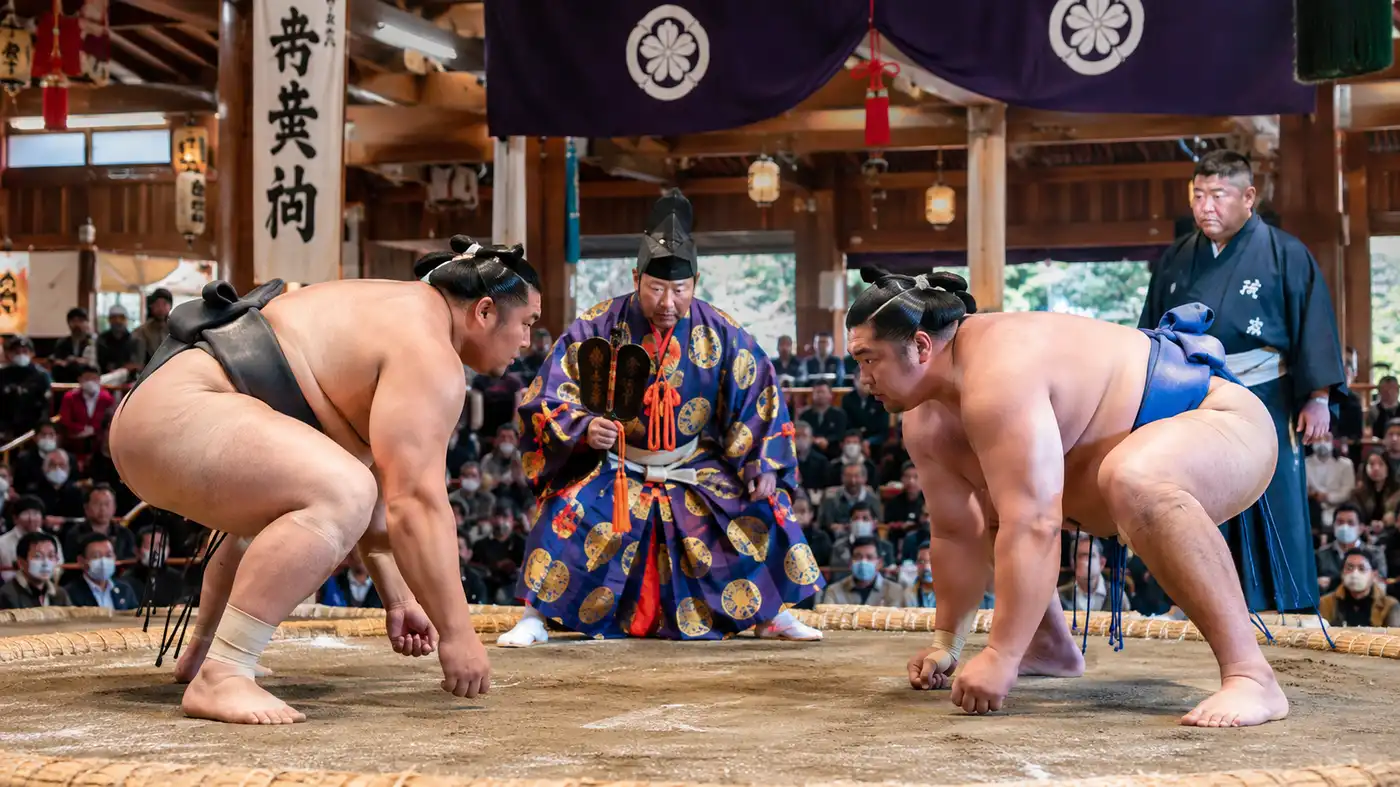
Most travelers only see rikishi on television during the fifteen-day grand tournaments, clad in embroidered silk aprons and tossing handfuls of coarse sea salt. Behind those ceremonial bouts lies a grueling reality of pre-dawn physical trauma, collective living, and rigid feudal hierarchy. Learning how a sumo wrestler in japan eats, trains, and moves through the division ladder changes the experience of watching the bouts from simple curiosity into genuine appreciation.
Book your sumo wrestling kyoto experience:
Sumo Ranking and the Brutal Hierarchy of the Divisions
Status governs every breath inside professional sumo. The Japan Sumo Association organizes active competitors into six distinct sumo divisions, and the gap between tiers is vast. Higher ranks receive generous stipends, private rooms, custom silk robes, and junior peers who wash their laundry. Lower ranks live like indentured apprentices in crowded bunkrooms, cooking meals and cleaning toilets before sunrise.
Only the top two divisions carry the prestigious title of sekitori. These men make up roughly ten percent of all active japan sumo wrestlers. They earn fixed monthly salaries, sign autographs, and wear decorative multi-colored mawashi during tournament bouts. The remaining ninety percent survive on small allowances handed out per tournament, remaining essentially unpaid trainees while they chase promotion.
| Division Name | Wrestler Count | Monthly Pay Status | Living Privileges |
|---|---|---|---|
| Makuuchi | 42 | Salaried (¥1.4M to ¥3M base) | Private suite, attendants, formal silk kimono |
| Juryo | 28 | Salaried (¥1.1M base) | Private room, personal attendant, white training belts |
| Makushita | 120 | Unsalaried (tourney allowance only) | Communal dorm, kitchen chores, black cotton belt |
| Sandanme | ~180 | Unsalaried | Communal dorm, basic chores, wooden geta sandals |
| Jonidan | ~200 | Unsalaried | Communal dorm, cooking duties, thin cotton yukata |
| Jonokuchi | ~50 | Unsalaried | Communal dorm, sweeps the ring, early-morning keiko |
Within the top Makuuchi division, titles shift based strictly on win-loss records from the six annual grand basho. A wrestler starts as a Maegashira. If he secures winning records across several tournaments, he ascends through the sanyaku ranks: Komusubi, Sekiwake, and Ozeki. At the pinnacle sits the Yokozuna, the grand champion. Reaching Yokozuna demands sustained dominance, and unlike lower ranks, a Yokozuna cannot be demoted. When his body fails him and he can no longer win, tradition dictates immediate retirement. You can read more about how tournament bouts operate in this breakdown of Sumo Wrestling Rules, Scoring, and Weight Classes.
Inside the Heya: Morning Keiko and Everyday Life
A stable, or heya, operates like a cross between a military barracks, a boarding school, and a Buddhist temple. There are currently about 43 active stables across Japan, mostly concentrated in Tokyo wards like Sumida, Koto, and Ryogoku. The stablemaster, known as an oyakata, runs the household alongside his wife, the okamisan. She manages finances, coordinates logistics, and plays surrogate mother to teenage boys away from home for the first time.
Morning keiko begins in near darkness for junior rikishi. Around 5:30 AM, Jonokuchi and Jonidan grapplers enter the dohyo to sweep the packed earth, sprinkle water, and begin warm-ups. They do hundreds of shiko - lifting each leg high into the air and driving it hard into the clay. They slide across the ring in suriashi drills. By 7:30 AM, the sekitori stroll downstairs, wrapping their thick white canvas belts while junior wrestlers bow low and offer ladles of rinse water.
Pro tip: If you arrange to visit morning training through a stable tour, pack thick wool socks. Guests sit completely still on hardwood or tatami floors for roughly two hours without shoes, and stables keep their sliding windows open even in January.
Collisions during morning practice are shocking up close. In butsukari-geiko, one wrestler acts as a target while the other charges repeatedly at full speed, slamming his chest against his partner until he collapses from sheer exhaustion. Dust coats sweat-soaked skin. Breathing turns into ragged gasps. Blood from cut lips drops straight into the clay. Senior rikishi rarely offer vocal encouragement; they give brief nods or bark sharp corrections when footwork slips. If you plan to travel through the capital and want to witness this firsthand, check out our guide on watching morning practice at Tokyo stables.
Chankonabe, Midday Sleep, and the Body of a Sumo Player
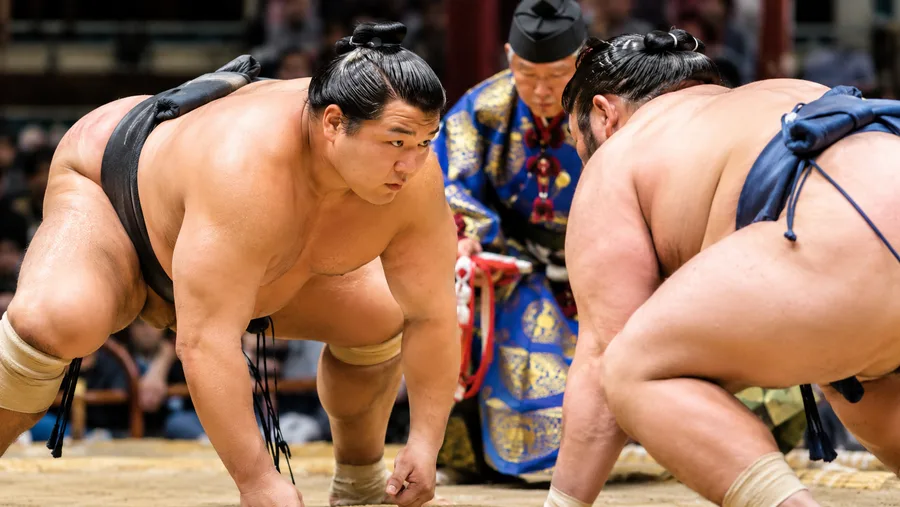
People assume a sumo wrester eats constantly from dawn to midnight. The actual routine surprised me when I first saw it up close. Sumo wrestlers skip breakfast entirely. Training hard on an empty stomach shifts their metabolism into fat-storage mode and builds up a savage appetite by midday.
Around 11:00 AM, practice ends. The wrestlers head to the communal bath, again in strict rank order. Sekitori soak first, scrubbing off sweat and dust while younger recruits stand by with dry towels. By noon, everyone gathers around large dining tables for the day's first meal: chankonabe. This rich, steaming stew contains vast amounts of cabbage, daikon radish, mushrooms, tofu, chicken meatballs, and pork belly simmered in dashi broth. Wrestlers consume multiple deep bowls of stew alongside three or four massive mounds of white rice, washed down with beer or green tea.
Note: Public chankonabe restaurants near Ryogoku Station serve recipes sourced from retired wrestlers, but commercial kitchens usually reduce the sodium and oil levels to suit regular tourist appetites.
Right after finishing several thousand calories, the entire stable lies down for a mandatory afternoon nap. Sleeping immediately after a massive carbohydrate-heavy meal spikes insulin, driving calories straight into adipose tissue and muscle recovery. A typical rikishi weighs between 135 and 170 kilos. Maintaining that mass takes deliberate work, and the physical toll on knees, spines, and hearts can be punishing over a ten-year career.
Book your sumo wrestling kyoto experience:
How to Become a Sumo Wrestler and Enter the Ring
Stepping onto the professional dohyo is not a hobby path. There are no recreational sumo wrestling classes that feed into the professional system; you join a heya as a full-time ward or you do not enter grand sumo wrestling at all. Most recruits enter right after graduating from junior high or high school at age fifteen or eighteen, although collegiate champions from powerhouse university clubs can skip the lowest tiers through special amateur allowances.
- Age and physical entry tests: applicants must be under 23 years old, at least 167 cm tall, and weigh at least 67 kg, though medical boards occasionally grant minor waivers.
- Foreign national limits: the Japan Sumo Association restricts each stable to exactly one foreign-born wrestler, keeping the total pool of international rikishi very low.
- Adopting a shikona: every trainee takes a ceremonial ring name, often incorporating kanji characters honoring his stablemaster, local rivers, or legendary past champions.
- Giving up ordinary independence: young apprentices surrender their smartphones during early training months, and driving a personal vehicle is completely forbidden for all active wrestlers.
Where are sumo wrestlers from originally? The overwhelming majority are Japanese, but international athletes have left a massive imprint on pro sumo wrestling over the last three decades. Champions from Mongolia, Georgia, Hawaii, and Bulgaria have climbed to the highest tiers. Mongolian rikishi, in particular, dominated the Yokozuna rank for over twenty straight years because traditional Mongolian folk wrestling builds exceptional grip strength and lateral balance.
Life outside the ring requires strict adherence to custom. A sumo player cannot wear casual western clothes in public. If he walks down to a neighborhood convenience store, he must wear a yukata or kimono and wooden geta clogs, hair tied into a traditional chonmage topknot with camellia oil. The public visibility makes misconduct impossible to hide, which is exactly why the association enforces the dress code.
How Popular Is Sumo Wrestling in Japan Today?
Sumo wrestling in Japanese culture occupies a strange, reverent space. It is not viewed merely as a sport; it is a sacred Shinto rite practiced by secular athletes. When people ask what is sumo wrestling, Japanese purists often describe it as shinji, a religious ceremony performed for the deities to ensure fertile harvests and community health.
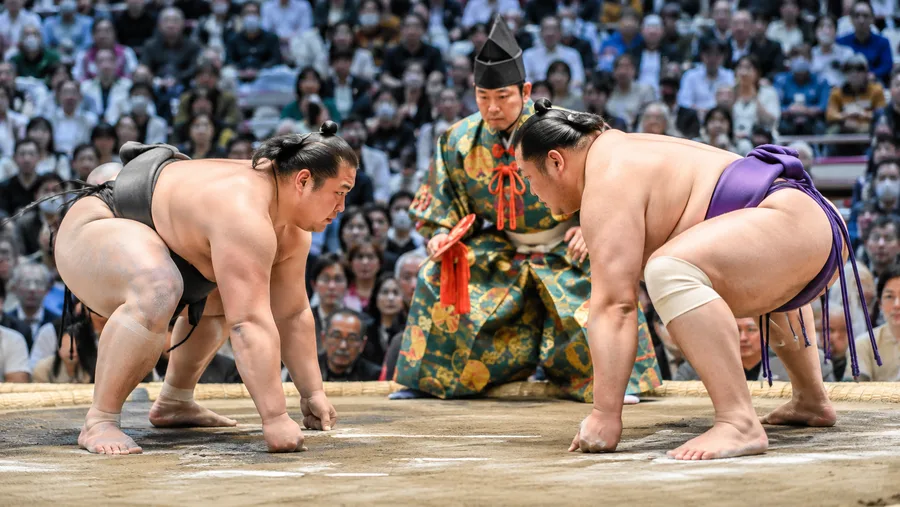
Is sumo wrestling still popular among ordinary citizens? Attend a tournament day at Tokyo's Kokugikan arena and you will see capacity crowds of over 10,000 spectators roaring from the box seats. Tickets for major basho in Tokyo, Osaka, and Fukuoka frequently sell out within forty minutes of opening. That said, the audience skews older. Young people in Tokyo flock to professional baseball or soccer games far more readily than sumo matches, though charismatic new rikishi occasionally trigger waves of youthful interest on social media.
- Six annual tournaments: Tokyo hosts three basho in January, May, and September, while Osaka, Nagoya, and Fukuoka each host one.
- Regional巡業 (Jungyo) tours: between tournaments, the stable caravans travel to smaller rural towns, letting local fans meet wrestlers up close.
- Television broadcasts: public broadcaster NHK broadcasts live bouts daily from 3:00 PM to 6:00 PM during tournament runs, maintaining steady viewership among older demographics.
Despite scandals over hazing and gambling that shook the organization in past decades, grand sumo wrestling retains deep institutional respect. Corporate sponsors line up to fund banner prizes, and winning a tournament cup remains one of the most prestigious athletic honors in the nation.
Frequently Asked Questions about japanese sumo wrestlers
What is the sumo rank system based on?
Ranks reflect win-loss records from official fifteen-day tournaments held six times per year. Wrestlers who secure eight or more wins out of fifteen earn promotion, while losing records result in immediate demotion, except for Yokozuna who choose voluntary retirement instead.
Are sumo wrestlers Japanese citizens only?
Wrestlers from any nationality can enter grand sumo wrestling, but each stable is legally limited to one foreign-born member. Foreigners who want to become stablemasters after retiring must obtain Japanese citizenship to hold shares in the association.
Why do sumo wrestlers throw salt before matches?
Throwing salt is a Shinto purification ritual. Rikishi toss handfuls onto the dohyo to cleanse the clay of evil spirits, protect themselves from catastrophic injuries, and honor the sacred ground before engaging in combat.
How much money do japan sumo wrestlers make?
Top-tier Yokozuna earn roughly ¥3,000,000 per month as a base salary, plus substantial sponsor bonuses and tournament prize money. Wrestlers in the four lower divisions receive no monthly salary at all, living only on small room-and-board allowances.
Quick Reference
- Six official divisions with six annual 15-day tournaments
- Only sekitori (top two tiers) receive monthly salaries
- Skip breakfast; eat massive chankonabe stews before afternoon naps
- Stables restricted to one foreign-born competitor each
- Active wrestlers barred from driving cars or wearing modern street clothes
Book your sumo wrestling kyoto experience:
My Take
Standing outside a Ryogoku stable on a crisp morning while the thuds of practice echo down the street reveals what television broadcasts miss. Pro sumo wrestling is an endurance trial where teenagers trade personal freedom, digital comforts, and joint health for a slim shot at national honor. If you visit Japan during tournament season, make the effort to secure tickets. Even from the cheap balcony seats with a cold can of green tea in hand, watching two hundred-and-fifty-kilo men hurtle into each other at full speed inside a tiny circle of straw is an athletic spectacle you will never forget.
Read more about sumo wrestling kyoto.